Wednesday, May 27, 2020

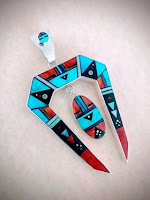
THE AMAZING INLAY JEWELRY OF NAVAJO JIM HARRISON


Jim Harrison is a world re-known Navajo silversmith who creates gorgeous complex and intricate inlay jewelry. Each piece is unique and highly collectible. With sleek and contemporary shapes and designs, he manages to balance Navajo tradition with his stylized approach to Indian imagery. His work often depicts the night sky, yei figures, Hopi and Navajo Sunfaces and desert landscapes. Jimmie was mentored by the famous master silver and gold smiths, Preston and Jesse Monongye, and you can see their influence in his work. He has developed his own stunningly beautiful style and his designs continue to change and evolve. 

The work of Jim Harrison is very distinctive and easily recognizable. Many people upon seeing Jim Harrison jewelry think these designs are painted. Jim Harrison creates the designs and then cuts and inlays each stone himself. Jim's work is of the highest qualily. In addition to using Southwestern turquoise in his jewelry, he uses stones from all over the world: Australian opal, pink rhodinite from Russia, lavender phophosiderite from Peru, lime green varisite from Utah, vivid green Maw Sit Sit from Miramar or southeastern Asia, dark purple sugilite and dark green malachite from throughout the world,  dark blue Lapis Lazuli from Afghanistan, red and orange spiny oyster from the Sea of Cortez, and red coral from the Mediterranean. 


His jewelry often features Navajo YĆ©'ii, or supernatural beings. The term Yei derives from the word Yeibicheii meaning the Holy People. Navajo Yei (Yeii) spirits, or deities, are believed to control elements such as the rain, snow, wind and sun and control the night and day. Each piece pf Jimmie Harrison Jewelry tells a story.

Jim is the winner of numerous awards from various fairs and museums, ranging from the Santa Fe Indian Market, Navajo Nation Fair, Museum of Northern Arizona, Heard Museum Fair and the New Mexico State Fair. He is undeniably one of the best Navajo inlay jewelers working in the business today.

We are pleased to offer Jim Harrison's jewelry to the public. Visit our website Tumbleweeds Jewelry to view the magnificent and amazing inlay jewelry of Navajo artist Jim Harrison.


Digg ThisAdd To Del.icio.us Add To Furl Add To Reddit Fav This With Technorati Add To Yahoo MyWeb Add To Newsvine Add To Google Bookmarks Add To Bloglines Add To Ask Add To Windows Live Add To Slashdot Stumble This

Wednesday, March 25, 2020

A Farewell to Darryl Becenti - Navajo Silversmith


The Native American jewelry world has lost another incredibly talented artist. It is with a heavy heart that we must inform you that Darryl Becenti passed away this past weekend. Darryl was one of our favorite silversmiths and he was also a sandpainter. He was born in 1957 in Gallup, New Mexico. He was taught silver smithing by his brothers-in-law David and Leroy Reeves. He was also related to Sunshine Reeves, Gary Reeves, and the Cadman family. Darryl used to make his own stamps and dyes, and heavily employed magnificent stars, fans, scallops, shells, and elaborate appliques in all of his jewelry. His jewelry is highly prized for it's deep hand-stamped Navajo designs, repousse silver work, and thick gauge of silver. The Native American jewelry world has lost one of its bright stars. He will be deeply missed.


Your internet source for authentic American Indian jewelry

Digg ThisAdd To Del.icio.us Add To Furl Add To Reddit Fav This With Technorati Add To Yahoo MyWeb Add To Newsvine Add To Google Bookmarks Add To Bloglines Add To Ask Add To Windows Live Add To Slashdot Stumble This

Saturday, March 14, 2020

SANTO DOMINGO DEPRESSION ERA THUNDERBIRD NECKLACES


Here is a nice old traditional Santo Domingo Thunderbird necklace from the 1940's. These necklaces are often referred to as Depression Necklaces. During that era, materials were scarce and so the Santo Domingo indians used whatever materials were available to make these necklace - materials such as broken bakelite shards, gypsum, colored plastic from combs, pails or restaurant spoons and forks, crushed turquoise chips, while old phonograph records or car battery casings were used as the backing material. This set has crushed turquoise insets in each piece of the necklace. These necklaces were sold to tourists along the highway or at RR stops for as little as 1-dollar during the Great Depression. They've become so collectible that they're becoming more and more difficult to come by. If you are collecting these types of Santo Domingo depression folk art necklaces, this one would be a wonderful addition to your collection.

Tumbleweeds Jewelry

Digg ThisAdd To Del.icio.us Add To Furl Add To Reddit Fav This With Technorati Add To Yahoo MyWeb Add To Newsvine Add To Google Bookmarks Add To Bloglines Add To Ask Add To Windows Live Add To Slashdot Stumble This

Wednesday, February 12, 2020

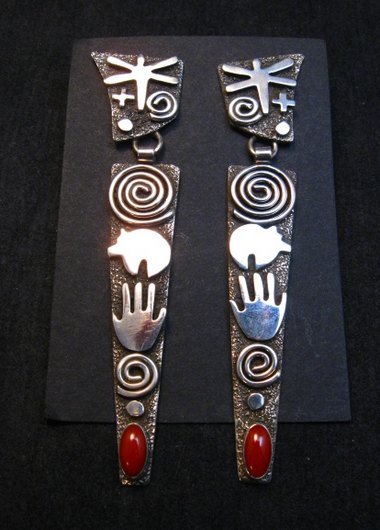
Image 0 of Extra long Navajo Alex Sanchez Petroglyph Coral Silver Earrings

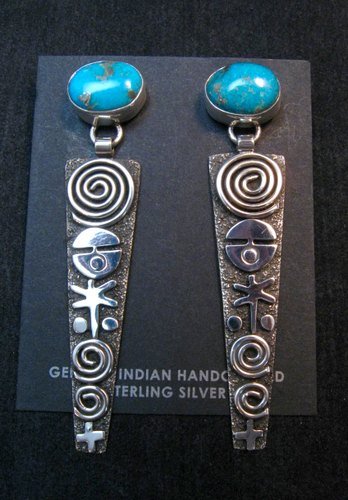
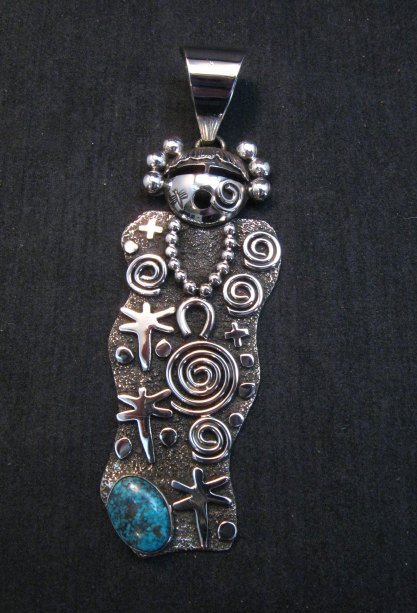
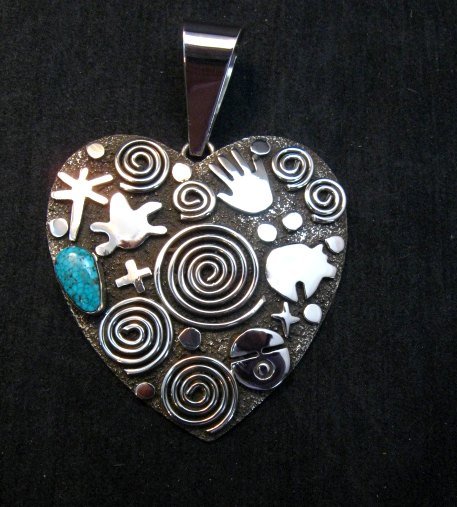
ALEX SANCHEZ JEWELRY


Check out the amazing one of a kind jewelry by Native American silversmith 


Image 0 of Navajo Alex Sanchez Turquoise Silver Petroglyph Earrings
   Image 0 of Extra long Navajo Alex Sanchez Petroglyph Coral Silver Earrings
Image 0 of Navajo Alex Sanchez Maiden Pendant Turquoise Silver    Image 0 of Alex Sanchez Turquoise Heart Pendant, Navajo, Petroglyph                                    

Digg ThisAdd To Del.icio.us Add To Furl Add To Reddit Fav This With Technorati Add To Yahoo MyWeb Add To Newsvine Add To Google Bookmarks Add To Bloglines Add To Ask Add To Windows Live Add To Slashdot Stumble This

Sunday, January 12, 2020

Buy Authentic Native American Indian Jewelry from Reputable Dealers!

This article was copied from the U.S. Department of Justice website.  Just a reminder to buy your Native American Indian jewelry from reputable dealers or from the artists directly! Tumbleweeds Jewelry www.tumbleweedsjewelry.com sells only authentic Native American made jewelry!


JUSTICE NEWS
Department of Justice
Office of Public Affairs
FOR IMMEDIATE RELEASE
Monday, January 6, 2020
Three Defendants Plead Guilty to Conspiring to Fraudulently Sell Imported Jewelry From the Philippines As Native American-Made
Three members of an international conspiracy to import knock-off jewelry from the Philippines and misrepresent it as Native-American have pleaded guilty for their roles in the fraudulent scheme, announced Assistant Attorney General Brian A. Benczkowski of the Justice Department’s Criminal Division and U.S. Attorney Michael Bailey of the District of Arizona. 

On Jan. 6, all three defendants pleaded guilty before U.S. Magistrate Judge John Z. Boyle of the District of Arizona.  Laura Marye Wesley, a.k.a. Laura Lott, 32, pleaded guilty to one count of conspiracy to commit misrepresentation of Indian-produced goods, wire fraud, mail fraud, and entry of goods by means of false statements and smuggling goods, for her role in the manufacture, importation, and sale of knock-off jewelry as Native American-made.  Wesley is scheduled to be sentenced on March 30, 2020.   

Christian Coxon, 46, pleaded guilty to one count of conspiracy to misrepresent Indian-produced goods and to commit wire fraud, for his role in ordering and misrepresenting imported, knock-off jewelry as Native American-made at his retail store Turquoise River Trading Company, located in San Antonio, Texas.  Coxon is scheduled to be sentenced on March 23, 2020.    

Waleed Sarrar, a.k.a. Willie Sarrar, 44, pleaded guilty to one count of conspiracy to misrepresent Indian-produced goods and to commit wire fraud, for his role in ordering and misrepresenting imported, knock-off jewelry as Native American-made at his retail store Scottsdale Jewels, located in Scottsdale, Arizona.  Sarrar is scheduled to be sentenced on March 30, 2020. 

According to information that the defendants admitted to as part of their pleas, from January 2016 through February 2019, they conspired with each other, and others, to design jewelry in the Native-American Indian-style and manufacture the jewelry in the Philippines with Filipino labor.  The defendants also conspired to import the jewelry from the Philippines to Arizona without indelible markings as required by law, and display, advertise, and sell the jewelry to customers based on false representations that the jewelry items were made by Indians in the United States.  To perpetrate the fraud scheme, the defendants and their conspirators communicated by phone, text, and email, including across state and country borders; used private commercial shipping services such as FedEx to import jewelry from the Philippines to the United States; paid for the jewelry inventory through credit cards, including via web-based credit card processors, and by check; and charged the credit cards of customers who purchased the imported Indian-style jewelry. 

As part of her plea, Wesley agreed that she owned and operated LMN Jewelers, a jewelry business that specialized in the sale of Native-American-style jewelry, and co-owned and co-operated Last Chance Jewelers, a similar jewelry business.  She also admitted to removing “Made in the Philippines” stickers from bags of imported jewelry, smuggling jewelry into the U.S. from the Philippines through the U.S. Postal Service to avoid inspection by federal authorities at the port of entry, wiring money to the Philippines to cover the costs of the jewelry-making business there, working with Filipino factory workers who were manufacturing the knock-offs, and delivering the knock-off Native-American-style jewelry to retail jewelry stores in Arizona, Colorado, California, Texas, Minnesota, Utah, and elsewhere.     

The defendants face a maximum penalty of up to five years in prison and fines up to $250,000.  Their sentencing dates have not yet been set.      

The Indian Arts and Crafts Act (IACA) prohibits the offer or display for sale, or the sale of any good in a manner that falsely suggests that it is Indian produced, an Indian product, or the product of a particular Indian and Indian tribe.  The law is designed to prevent products from being marketed as “Indian made,” when the products are not, in fact, made by Indians.  It covers all Indian and Indian-style traditional and contemporary arts and crafts produced after 1935, and broadly applies to the marketing of arts and crafts by any person in the United States.  The IACA provides critical economic benefits for Native American cultural development by recognizing that forgery and fraudulent arts and crafts diminish the livelihood of Native American artists and craftspeople by lowering both market prices and standards.   

This case was investigated by the Office of Law Enforcement for the Southwest Region of the U.S. Fish and Wildlife Service and the Phoenix Field Office of U.S. Immigration and Customs Enforcement’s Homeland Security Investigations, with assistance from the U.S. Department of the Interior Indian Arts and Crafts Board and Office of Law Enforcement and Security, the Arizona Game and Fish Department, the U.S. Forest Service Law Enforcement and Investigations, and the Texas Game Wardens.  Trial Attorney Mona Sahaf of the Criminal Division, Human Rights and Special Prosecutions Section, and Assistant U.S. Attorneys Peter Sexton and Mark Wenker are prosecuting the case.   

Component(s): 
Criminal - Human Rights and Special Prosecution Section
USAO - Arizona
Press Release Number: 
20-02
Updated January 8, 2020

Digg ThisAdd To Del.icio.us Add To Furl Add To Reddit Fav This With Technorati Add To Yahoo MyWeb Add To Newsvine Add To Google Bookmarks Add To Bloglines Add To Ask Add To Windows Live Add To Slashdot Stumble This

Friday, May 4, 2018

MaryTafoya - Santo Domingo Kewa Jewelry Artist


Mary Tafoya, in her own words:

Growing up in a traditional family in Santo Domingo Pueblo, the last thing on my mind was that, my art would allow me to travel to a great part of the United States, much less have my jewelry designs in demand at galleries and art shows!

I have employed skills acquired helping my parents stringing, designing traditional Santo Domingo jewelry. Remember the old style Thunderbird necklaces inlaid on battery casings or records, being sold along highways or on the plaza in Santa Fe? Those are the inspiration for my art.

My jewelry has evolved from traditional Santo Domingo turquoise "heishi" and "Depression Era" work to a modern, contemporary, mosaic, multi-colored inlay jewelry, that is versatile for formal and casual wear. Using natural stones, shells, and turquoise, my designs are free form inlay where no two pieces are alike as each stone, shell or turquoise is cut to fit a design right out of my memory. I try to find different types and colors of stones, unusual shapes of shell, cutting them at different angles to get the desired look. Using different colors of turquoise from different areas of the country or world is not out of the question and can give a necklace or pendant an unusual look. Lately, I have used silver filings to create a "glitter" effect to many pieces. Sometimes I do not know what a piece will look like until it is finished.

My pieces have fooled many of my customers and even seasoned art collectors by asking, "How did you paint these designs?" Until told that these are the natural colors of my material and how they are intricately inlaid, are they amazed in the detail of my work.

I currently live on the Santo Domingo Pueblo with my husband, Lorenzo (also a jeweler/metalsmith) and four children. Our studio, workshop is behind the house and we have had many of our customers tour the facility and we show them the materials, tools, and equipment we use in our work. We love showing people our studio as it gives them the perspective of the work and a deeper appreciation of it.
Start Shopping - See all Mary Tafoya's jewelry


Digg ThisAdd To Del.icio.us Add To Furl Add To Reddit Fav This With Technorati Add To Yahoo MyWeb Add To Newsvine Add To Google Bookmarks Add To Bloglines Add To Ask Add To Windows Live Add To Slashdot Stumble This

Tuesday, March 20, 2018

Native American Spiny Oyster Shell Jewelry

 Native Americans have been using spiny oyster shells in their jewelry for hundreds of years. Spiny Oyster or Spondylus is a type of bivalve mollusk found in all subtropical and tropical seas, usually close to the coasts. They are not, in fact, oysters but rather they are in the same family as scallops. While they are not closely related to true oysters; they do share some habits such as cementing themselves to rocks rather than attaching themselves by a byssus.


Shown here are examples of actual purple and orange spiny oyster shells (not for sale). As you look at the raw shells, imagine the cutting & polishing skills required to turn these rough shells into such elegant finished jewelry!  We have lots of spiny oyster jewelry available for sale on our website.   


Archaeological evidence indicates that pre-historic peoples have been trading spiny oyster shells to make bangles and other ornaments for thousands of years. Spondylus harvested from the Gulf of California were traded to tribes throughout Mexico and the American Southwest.


Digg ThisAdd To Del.icio.us Add To Furl Add To Reddit Fav This With Technorati Add To Yahoo MyWeb Add To Newsvine Add To Google Bookmarks Add To Bloglines Add To Ask Add To Windows Live Add To Slashdot Stumble This

Saturday, December 30, 2017

MARY TAFOYA, CHRISTOPHER NIETO, AND TIMOTHY BAILON
THREE INNOVATIVE SANTO DOMINGO - KEWA - JEWELRY ARTISTS

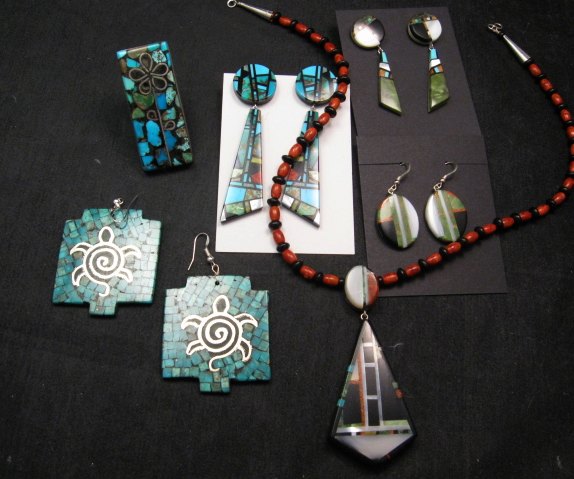
There are many Santo Domingo tribal members making mosaic inlay and heishi jewelry these days, but here are three Kewa artists whose jewelry really stands out from the crowd. All three of these Santo Domingo jewelry makers have very distinct and unusual styles.

Christopher Thomas Nieto  is a young self-taught jeweler, whose work just keeps better and better! He has become famous for his intricate and innovative mosaic inlay and high quality heishi work. He inlays on round surfaces, he inlays the sides of his pieces, and he incorporates many different shapes into his jewelry!

Timothy Bailon is another Santo Domingo native whose style is very different from the traditional Kewa jewelry. His jewelry is in high demand. This photo shows some of the latest designs by Chris and Timothy.


Mary Tafoya is one of our favorite jewelry makers who creates unique contemporary works of art. Her colorful abstract jewelry has become a favorite of many Native American jewelry lovers. Her jewelry is colorful, somewhat "folksy", even whimsical, and her unique designs are extremely popular. She learned her jewelry making techniques from her parents. She has taken this ancient art of mosaic where no one else has, while staying very traditional in technique. She uses different types and colors of stones, unusual shapes of shell, cutting them at different angles to get the desired look. Feast your eyes on some of her original pieces!


Visit our website tumbleweedsjewelry.com for our latest selection of jewelry by these ground breaking artists.

Digg ThisAdd To Del.icio.us Add To Furl Add To Reddit Fav This With Technorati Add To Yahoo MyWeb Add To Newsvine Add To Google Bookmarks Add To Bloglines Add To Ask Add To Windows Live Add To Slashdot Stumble This

Thursday, July 6, 2017

Honoring Master Silversmith Orville Tsinnie

     It is with a heavy heart that I write this post to say that one of my favorite artists, Orville Tsinnie, passed away on May 23, 2017. Orville was a extraordinarily talented silversmith and a wonderful big-hearted man as well. The Navajo world has lost one of its greatest and most treasured artists. He will be dearly missed.

    Orville Tsinnie was a master Navajo silversmith who had been making jewelry since the 1970s and had won numerous awards, including a Lifetime Achievement award from the Indian Arts and Crafts Association (IACA), an honor that brought well-deserved recognition to this fine American Indian artist. Orville was a perfectionist, hand picking and polishing only the highest quality natural stones. He cut, polished and set the stones by hand. The level of craftsmanship in Orville's work is superior. His designs were flawlessly executed, his soldering technique very clean, and his finishing and polishing meticulous. This careful attention to detail set Orville's jewelry apart from many others, and revealed the pride he took in his work. A steady presence in the world of American Indian art for over forty years, Orville Tsinnie's work created some of the finest and unique Native American hand made jewelry on the market today.  His works are highly collectible.

     We had the opportunity to meet with and purchase jewelry from Orville many times over the years and it was always a pleasure to visit with him, his wife Darlene, and his children and grandchildren. We saw him often at various Native American Jewelry markets and also visited him at his studio in Shiprock, New Mexico. 

All the Orville Tsinnie jewelry that we sell on our website was purchased directly from the artist or from his family. We last placed an order from Orville a week before he passed away. His family contacted us several weeks after his death to tell us that he had finished our order before he died and that everything was complete except for some polishing. The photo below shows that jewelry.  

http://www.tumbleweedsjewelry.com/store.php?seller=tumbleweedsjewelry&Tsearch=orville_tsinnie

http://www.tumbleweedsjewelry.com/store.php?seller=tumbleweedsjewelry&Tsearch=orville_tsinnie


Please visit our website https://www.tumbleweedsjewelry.com  to add a piece of Orville Tsinnie's jewelry to your Native American jewelry collection.

You can also visit Orville's facebook page here https://www.facebook.com/orvilletsinnie/

Digg ThisAdd To Del.icio.us Add To Furl Add To Reddit Fav This With Technorati Add To Yahoo MyWeb Add To Newsvine Add To Google Bookmarks Add To Bloglines Add To Ask Add To Windows Live Add To Slashdot Stumble This

Wednesday, September 17, 2014

Navajo Silversmith - Gary Reeves

We were sorry to hear about the recent death of Navajo silversmith, Gary Reeves. Gary was born in 1962 in Gallup, N.M. He learned silver work in 1974. He was the brother to David Reeves and half brother to Sunshine Reeves. While each artist has his own individual style, they all share an affinity for complex engraved and hand stamped geometric designs and they are all a part of recreating and popularizing the old Navajo designs of the early 20th century. They call their style Navajo Revival Style. Gary filled his old style silver with lots of stamp patterns and used high quality pieces of turquoise. He had won many awards for his exceptional jewelry.

Gary Reeves Navajo Jewelry for sale at www.tumbleweedsjewelry.com


Digg ThisAdd To Del.icio.us Add To Furl Add To Reddit Fav This With Technorati Add To Yahoo MyWeb Add To Newsvine Add To Google Bookmarks Add To Bloglines Add To Ask Add To Windows Live Add To Slashdot Stumble This

Monday, May 12, 2014

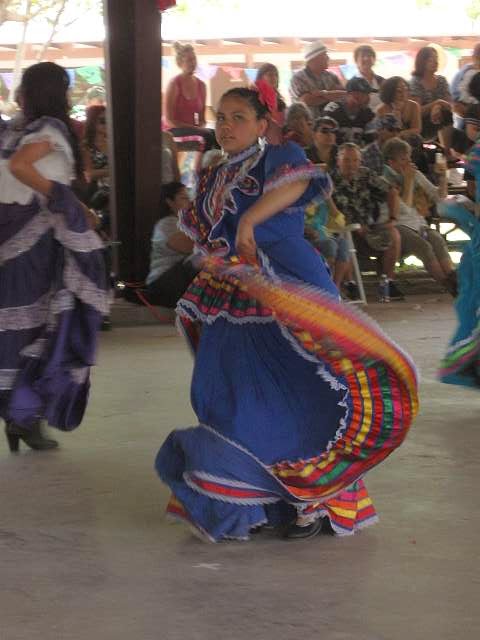
Pictures from the St. Francis de Paula Church Festival in Tularosa, New Mexico

St. Francis de Paula Church in my hometown of Tularosa, New Mexico held their annual Fiesta on Sunday May 11. The music, dancing, food and fellowship was fantastic. So I just had to share some photos.


Digg ThisAdd To Del.icio.us Add To Furl Add To Reddit Fav This With Technorati Add To Yahoo MyWeb Add To Newsvine Add To Google Bookmarks Add To Bloglines Add To Ask Add To Windows Live Add To Slashdot Stumble This

Friday, April 25, 2014

Indian Arts and Crafts Spring Show

I spent today at the IACA spring wholesale trade show, which is the #1 trade show for sellers of fine American Indian Art. I was able to meet a few artists that I had never met before, like Navajo artists Harold Stevens, Ronnie Henry, Edison Cummings and Laguna artist Duane Maktima. I will be adding some of their jewelry to my website Tumbleweeds Jewelry soon. And of course I added some new pieces made by my all-time favorites, Orville Tsinnie, Shane Hendren, Tommy Jackson, Alfred Joe and Bruce Hodgins to my inventory as well. Photos to follow.

Digg ThisAdd To Del.icio.us Add To Furl Add To Reddit Fav This With Technorati Add To Yahoo MyWeb Add To Newsvine Add To Google Bookmarks Add To Bloglines Add To Ask Add To Windows Live Add To Slashdot Stumble This

Wednesday, April 16, 2014

Anasazi Pottery Shard Jewelry

ANASAZI ANCIENTS
Where did they go? And why? We will never know. But what remains is their art. And this art takes on its highest form in their pottery.

Looking for something unusual for your Native American jewelry collection? How about this new Native American handmade jewelry that incorporates ancient prehistoric pot shards into the jewelry - bracelets, earrings and pendants - created by Randy, Etta & Randall Endito.

Anasazi Pot Shard Jewelry
Anasazi Pottery Shard Jewelry


The pot shards incorporated into this jewelry are from private deeded property. These shards were found in Section Number 33, Township 12 North, Rnage 16 West NMPM McKinley County. They comply with the New Mexico and Arizona laws concerning the removal of antiquities. A certificate to this effect will be included with your purchase.

Etta Endito learned how to work with silver by assisting her mother after school. By the age of 18, Etta was working as a full-time silversmith. Today, she and her husband Randy and their son Randall work as a team to create elegant, contemporary, well-crafted jewelry. Etta's work has been featured in the Indian Craft Shop of The Department of the Interior in Washington D.C.


Digg ThisAdd To Del.icio.us Add To Furl Add To Reddit Fav This With Technorati Add To Yahoo MyWeb Add To Newsvine Add To Google Bookmarks Add To Bloglines Add To Ask Add To Windows Live Add To Slashdot Stumble This

Friday, December 6, 2013

Zuni Fetishes for Sale

Turtle Fetish - Marilyn Quam


The Zuni Indians of New Mexico are known the world over for their hand carved fetishes. A fetish is an object, natural or man-made, in which a spirit is thought to reside. Most Zuni fetishes depict animals such as bears, mountain lions, wolves, badgers, frogs, turtles, eagles, snakes, buffalo and others. But the Zuni also carve human, ceremonial and spirit figures, such as the corn maiden. The materials used to carve Zuni fetishes include common stones & gems, such as serpentine, alabaster, marble, turquoise, malachite and pipestone. Also used are organic materials such as wood, bone, horn, antler, shells, amber & jet.

The six principle traditional fetishes are the Mountain Lion (Guardian of the North), the Black Bear (Guardian of the West), the Badger (Guardian of the South), the White Wolf (Guardian of the East), the Eagle (Guardian of the Upper Regions) and the Mole (Guardian of the Lower Regions). The traditional bundles tied to fetishes, typically small turquoise & coral beads and arrowheads, can be seen as offerings to the animal spirit that resides within the fetish.

Zuni Fetish carvings have been used for many ceremonial purposes throughout history. Each animal or character has a specific meaning and use. Some are used to enable hunters to catch game by making the particular animal more plentiful while others are used for healing or to protect an individual or community.

A fetish may be signed by the carver, or not. Personalization by signing a piece of art traditionally violates the Zuni notion of community purpose, and the signing of artwork is a concept introduced to the Zuni by Anglo collectors and traders.


Digg ThisAdd To Del.icio.us Add To Furl Add To Reddit Fav This With Technorati Add To Yahoo MyWeb Add To Newsvine Add To Google Bookmarks Add To Bloglines Add To Ask Add To Windows Live Add To Slashdot Stumble This

Thursday, November 14, 2013

The Fabulous Jewelry of Nestoria Coriz


Santo Domingo Blue Gem Turquoise Necklace

Nestoria Coriz is the daughter of Lupe Pena and granddaughter of Santiago and Trinidad Pena. She began learning all facets of heishi, bead and stone work from her grandparents at the age of 6. At that time, there was little if any electrical power at the Santo Domingo Pueblo and so all jewelry work was created by hand.

As a teenager in the early 1960's Nestoria learned to make silver jewelry when she began working at Turpen's in Albuquerque alongside her father, Lupe Pena. Nestoria is now in her mid 60s and has created numerous award-winning necklaces. She is self-taught  in all aspects of the design and construction of her necklaces & jewelry. Nestoria uses the highest grades of  stones and shells in creating her unique pieces.

Nestoria's three sons, Daniel, Rodney ans Simon, are all following in the family tradition of creating and crafting unique pieces!

We have a small selection of Nestoria's and Daniel's necklaces available right now on our website. Any of them would make a perfect gift! The ceremonial necklaces can be worn by a man or a woman.

Digg ThisAdd To Del.icio.us Add To Furl Add To Reddit Fav This With Technorati Add To Yahoo MyWeb Add To Newsvine Add To Google Bookmarks Add To Bloglines Add To Ask Add To Windows Live Add To Slashdot Stumble This

Tuesday, November 5, 2013

Ready for the holidays!


Are you beginning to think about your holiday gift shopping? Well, we are ready for you. We have just returned from a jewelry buying trip through northern New Mexico and we brought back a large assortment of new contemporary, vintage and dead pawn Native American Indian jewelry. Please keep an eye on our New Arrivals section of our website to see our newest gift ideas. We will be adding items every day!

If you would like to receive a feed of this website's items and be updated every time we add an item to the website, just click here RSS Feed 


Digg ThisAdd To Del.icio.us Add To Furl Add To Reddit Fav This With Technorati Add To Yahoo MyWeb Add To Newsvine Add To Google Bookmarks Add To Bloglines Add To Ask Add To Windows Live Add To Slashdot Stumble This