Tuesday, January 8, 2013

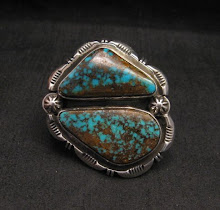
What's my old Indian jewelry worth?

Here is a question I receive frequently: "I inherited some Indian jewelry from my grandmother, grandfather, mother, uncle (fill in the blank) and I was wondering if you could tell me how much it is worth?" or " I found this piece of Indian jewelry at an estate sale. Do you think it is valuable?" Of course, everyone is certain that the piece of jewelry that they bought at a garage sale for $2, is in fact going to be worth thousands of dollars:-)

In order to determine the value of a piece of Native American jewelry, you need to consider the following factors: 

1. Is it really Native American handmade? Just because it "looks" Native American, doesn't mean it is a truly authentic piece of handmade Native American jewelry. And just because Granny bought it on a trip out west in the 1970's, does mean it was actually made by a Native American. Many tourist traps out west, even at the Grand Canyon, sold Indian "look-alike" jewelry that was actually made in Thailand, China, Philippines, Indonesia, the Middle East and elsewhere. 

Misrepresenting goods as Indian-handmade is a federal offense, so today most reliable shops will not do so. But back in the early 1970's, when there were no such regulations in place, there were a large number of imports coming into the country that looked like Indian art, but were not.  

1-a. Is it handmade or mass-produced? This question is closely related to question #1 above. But the truly valuable Indian jewelry is handmade, not machine made. Was the piece completely handmade or was it made with manufactured components or processes and then simply assembled by Native Americans?


2. What is the piece made from?  Is the item made from sterling silver or some other precious metal, like 14 carat gold? Is it stamped "sterling" or "14K"? If not, the item should be tested to determine the metal content. Silver plated jewelry or jewelry made from nickel-silver, German silver, rhodium, or the like is really costume jewelry and hence not as valuable as something made from sterling silver, coin silver or 14K gold.  If the jewelry is set with turquoise, is the turquoise natural, stabilized, reconstituted or man-made? From what mine did the turquoise come?

3. Is the item hallmarked by the maker? A hallmark is put into the back of a piece of Native American jewelry, pottery, or other craft to identify the maker. To research Native American hallmarks in general, I recommend the following reference books: "Hallmarks of the Southwest" by Barton Wright, "Hopi Silver" by Margaret Wright, "Zuni: The Art & the People Vols. 1, 2,&3" by Barbara Bell, or "Native American and Southwestern Silver Hallmarks" by Billie Hougart.

Just because a piece of jewelry is not hallmarked, doesn't necessarily lower it's value. In the early part of the 20th century very few individuals signed their works. But knowing who made a piece of jewelry is one of the most important factors in determining its value. 


Once you have established who the maker was, you can do a little online research to help you learn more about your jewelry. Obviously, certain silversmiths and jewelers are more popular or collectible than others. The value of a certain artist's work is mostly determined by the marketplace. Sometimes, if the artist is deceased, the value of his work will be higher today than it was when he was alive. But in the case of an artist who is still working today, particularly a Zuni artist who is has been making the same family jewelry for the past 30 years, an old piece isn't going to be worth much more than a new one  that you could purchase from the same artist today.

4. How old is it? Sorry folks, but just because your jewelry is old, doesn't mean it is worth a whole lot more now, than when it was originally purchased. The value of Indian jewelry that was produced back in the 1970-80's has not risen significantly over the last 30 years. (Of course there are always exceptions.) The prices of contemporary jewelry have been rising recently, due to the increases in the cost of silver and the limited availability of high grade turquoise from the old Southwest mines, many of which are now closed.

5. How rare is it? Is this a one-of-a-kind piece? Or is it something that you see all over the Internet or QVC? 

6. Condition?  Are the stones loose, missing or cracked? Is the silver broken in any spots? Don't worry if the silver has turned dark. This is a normal property of silver. Many collectors like or even prefer the aged vintage patina that gives the silver a warm, mellow coloration.

7. Do you have a written receipt from the place where the item was originally purchased? This will go a long way towards substantiating the authenticity and hence the value of your jewelry. And of course, if the jewelry was purchased directly from the artist, there can be little question as to it's origin and authenticity. Any documentation you can provide (referred to as provenance) will help.


Digg ThisAdd To Del.icio.us Add To Furl Add To Reddit Fav This With Technorati Add To Yahoo MyWeb Add To Newsvine Add To Google Bookmarks Add To Bloglines Add To Ask Add To Windows Live Add To Slashdot Stumble This

Wednesday, November 28, 2012

Perfect Gifts for the Holidays

Native American Indian Jewelry makes a wonderful gift during any time of the year. But these individually handmade pieces of art are especially fitting as holiday presents.  

With the holiday season upon us, what better time than now to buy unique, one of a kind presents for the Native American jewelry lovers in your life? The popularity of American Indian jewelry has never been higher. When you buy Native American made jewelry, you are buying something that is not factory made, mass produced or imported; it is handmade by Native American Indian artists who create unique, one of a kind, works of art - no two pieces are identical.

 
The
Navajo, Zuni, Hopi and Santo Domingo
silversmiths, lapidarists and bead-makers have gained a world-wide reputation for their beautiful and distinctive jewelry. Unlike much of the assembly-line manufactured jewelry on the market today, Native American art is painstakingly hand-crafted, carrying with it the artist's own unique style and personal vision. Indian jewelry is rich in culture and tradition, since Native Americans have been making jewelry for well over one hundred years.
 

Whether you’re in search of rings, bracelets, necklaces or earrings, and whether you are an avid collector or neophyte, www.tumbleweedsjewelry.com has the quality, selection and prices that you are looking for. We strive to have something for everyone.


CLICK HERE TO VISIT OUR WEBSITE

Digg ThisAdd To Del.icio.us Add To Furl Add To Reddit Fav This With Technorati Add To Yahoo MyWeb Add To Newsvine Add To Google Bookmarks Add To Bloglines Add To Ask Add To Windows Live Add To Slashdot Stumble This

Tuesday, November 27, 2012

November is Native American Heritage Month

November is Native American Heritage Month

View our entire stock of new, dead pawn and vintage American Indian jewelry. Over 1200 authentic Native American handmade Bracelets, Rings, Earrings, Necklaces, Squash Blossoms, Pendants, Concho Belts, Buckles, Bolos & other Navajo, Zuni, Hopi and Santo Domingo jewelry items are available in stock and ready to ship within 1 business day from the time of your order.

 www.tumbleweedsjewelry.com


$image_title 


Digg ThisAdd To Del.icio.us Add To Furl Add To Reddit Fav This With Technorati Add To Yahoo MyWeb Add To Newsvine Add To Google Bookmarks Add To Bloglines Add To Ask Add To Windows Live Add To Slashdot Stumble This

Wednesday, September 19, 2012

Native American Silversmith: Kirk Smith


SAD NEWS FOR THE NAVAJO JEWELRY WORLD
 
We recently learned that one of our favorite Navajo silversmiths - Kirk Smith - died tragically on Monday, September 17, 2012. Kirk Smith was a student and former brother-in-law of the late master silversmith Harry Morgan. Kirk Smith's work is considered collector and investment quality. He began making jewelry in the 1960s, learning from his grandfather. His artistry and his vision will be sorely missed.

Below is an article from the local New Mexico Channel 4 newsroom:


"KOB Eyewitness News 4 learned what led to the death of a renowned Native American artist outside a Subway restaurant Monday night.

Albuquerque police confirmed on Tuesday that Rayono “Kirk” Smith died after being thrown from a moving pickup truck near Menaul and Princeton.

According to Smith’s family, he and his wife were in town buying supplies for his silver jewelry-making business when they stopped at the Subway to eat before heading back to their home in Grants.

That is when a blue Dodge pickup drove through the parking lot and hit Smith’s truck. An eyewitness told KOB that Smith went out to confront the driver, but that the driver and two others in the truck just laughed. Then they drove off and Smith jumped onto the truck's hood. The driver swerved to get Smith off the truck. Smith did fall and was found critically injured on Claremont Street. He later died at University of New Mexico Hospital.

Smith's cousin, Calvin Martinez told KOB the reason Smith confronted the driver of the pickup truck, was to get him to stay in the parking lot until the police could be called.


Digg ThisAdd To Del.icio.us Add To Furl Add To Reddit Fav This With Technorati Add To Yahoo MyWeb Add To Newsvine Add To Google Bookmarks Add To Bloglines Add To Ask Add To Windows Live Add To Slashdot Stumble This

Tuesday, July 31, 2012

Gene & Martha Jackson Jewelry


Martha and Gene Jackson are Navajo silversmiths from Chinle, Arizona. They have been making beautiful handcrafted sterling silver jewelry since the 1980s. They are featured in many Native American jewelry books and have won many awards. Gene's father was a silversmith, working in old traditional styles. Gene learned his skills from carefully observing his father and later refined his abilities by attending a class at the Navajo Community College. The well known Navajo silversmith Kenneth Begay, was his teacher. Some of Kenneth Begay's influence can be seen in Gene's pieces. Martha collaborates with her husband, from whom she learned silversmithing. They both prefer to work with traditional designs and materials. They stamp their work with a hogan symbol and their last name "JACKSON". Their son, Tommy Jackson, is a well-known silversmith in his own right.


Digg ThisAdd To Del.icio.us Add To Furl Add To Reddit Fav This With Technorati Add To Yahoo MyWeb Add To Newsvine Add To Google Bookmarks Add To Bloglines Add To Ask Add To Windows Live Add To Slashdot Stumble This